G20 PLAN FOR CRITICAL MINERALS
DELHI - BY MIDDLE EAST INSIDER - Nov 04,2023
The G7, established in 1975, is an intergovernmental political group consisting of seven member states: Canada, France, Germany, Italy, Japan, the United Kingdom, the United States, and the European Union (EU). These countries have historically wielded significant political, economic, and military power, and remain influential today. Japan is set to preside over the G7 in 2023, with the 49th G7 Summit scheduled to take place from May 19-21 in Hiroshima.
In recognition of the growing importance of other nations in global politics, the G20 (Group of Twenty) was created, which included emerging economies such as Argentina, Australia, Brazil, China, India, Indonesia, Mexico, Russia, Saudi Arabia, South Africa, South Korea, and Turkey, in addition to the G7 member countries. Although the G20 was established in 1999, it was initially attended only by finance ministers and central bank governors.
The G20 now represents more than 80% of global GDP and two-thirds of the world's population. It serves as a platform for both advanced and emerging economies to discuss and coordinate international responses to important global issues, making it the premier forum for economic cooperation. India will assume the G20 Presidency for 2023, and the 18th G20 Heads of State and Government Summit will be held in New Delhi in September 2023.
Critical minerals refer to non-fuel minerals that are vital for a country's economic and national security, but are susceptible to supply chain disruptions. These minerals include lithium, cobalt, graphite, copper, rare earth elements, and platinum group metals, among others. They are crucial for clean energy technologies like wind turbines, solar PV panels, storage batteries, and electric vehicles. Thus, their availability plays a significant role in achieving sustainable energy transition.
The gap between the supply and demand of critical minerals is widening. The International Energy Agency (IEA) predicts that, driven by the increasing deployment of clean energy technologies, the overall demand for critical minerals could surge up to six times by 2040. In certain scenarios, the demand for lithium, graphite, cobalt, and nickel could increase between 24-50 times.
Forecasts also indicate that the annual production of these minerals will increase by 5-6 times, surpassing the production value of coal, which will gradually be phased out, and growing to over US$250 billion by 2040. The steep price increase of cobalt and lithium by 3x and 12x, respectively, between 2020-22, serves as evidence of this market imbalance.
The G7 Ministers’ Meeting on Climate, Energy, and Environment was held in Sapporo, Japan on 15-16 April 2023, where a 36-page communiqué was released. In the communiqué, G7 countries committed to accelerating the phase-out of unabated fossil fuels to achieve their 2050 net-zero goals and to holistically address the climate, energy, and environment crisis. These decisions will significantly drive the future demand for critical minerals.
The following key decisions were adopted during the meeting:
A collective increase in offshore wind capacity of 150 gigawatts and a collective increase of solar photovoltaic to more than one terawatt by 2030.
Achieving a fully or predominantly decarbonized power sector by 2035.
Achieving 100% or the overwhelming penetration of sales of light-duty vehicles (LDVs) as zero-emission vehicles (ZEV) by 2035 and beyond. Additionally, they aim to achieve 100% electrified vehicles in new passenger car sales by 2035.
To collectively reduce by at least 50% the CO2 emissions from G7 vehicle stock by 2035 or earlier, relative to 2000 levels, as a halfway point to achieving net-zero.
The communiqué acknowledged that critical minerals and raw materials are becoming increasingly important for achieving a net-zero economy and meeting the ambitious targets set out by the G7 countries. It also acknowledged the potential threats and risks to the supply chain of critical minerals due to the lack of diversification of existing suppliers and monopolization.
The G7 recognized the need to create responsible and resilient supply chains for critical minerals and to support open, transparent, rules- and market-based trade in these minerals with traceability.
The G7 also opposed market-distorting measures and monopolistic policies for critical minerals. The G7 reaffirmed its commitment to strong ESG standards for critical minerals, which includes ensuring that the benefits of these minerals are realized by local communities, respecting human rights, minimizing environmental impact, promoting circularity in supply chains, enhancing recovery and recycling, advancing innovation and competitiveness, and promoting dialogues between extraction, producer, and consumer countries.
The G7's proposal of the "Five-Point Plan for Critical Mineral Security" was aimed at facilitating the clean energy transition. The plan included long-term supply and demand forecasting, developing responsible mineral supply chains, advancing recycling capabilities, promoting innovation for developing substitute materials, and preparing for short-term supply disruptions.
The G20, which includes countries like Australia, Brazil, China, India, Indonesia, Russia, and South Africa, must take this plan further to address the current challenges and strengthen mineral supply chains on a broader level. These countries are well-placed to supply critical minerals, develop processing and refining capabilities, and are expected to be high consumers of these minerals.
Establishing a parallel research capacity in an institution in an emerging economy would help to provide a more comprehensive understanding of the demand for critical minerals and their supply chains. This could involve conducting detailed studies on the demand for individual minerals, tracing their supply chains, mapping existing mineral resources and reserves, and identifying the capacity of mining companies, among other things. Such an effort would complement the work of organizations like the IEA and could help to guide the future development of the critical minerals sector.
Expanding the membership of critical mineral partnerships to include emerging economies is a key step towards diversifying suppliers and reducing supply chain vulnerabilities. Inclusive partnerships could help ensure access to critical minerals while promoting responsible and sustainable practices. Additionally, a high-level forum for minerals with a balanced representation from all continents could strengthen coordinated responses and standardization of ESG criteria.
Private investment and support from public financial institutions are also important in promoting the development of responsible and sustainable critical mineral supply chains. The G20 could benefit from building on the G7's commitments and proposals, such as the Partnership for Global Infrastructure and Investment (PGII), Mineral Security Partnership (MSP), and the Sustainable Critical Minerals Alliance.
These are all great ideas. In addition, the G20 could consider establishing international standards for recycling processes to ensure that they are environmentally sound and socially responsible. This could include setting criteria for the minimum percentage of materials that must be recovered from e-waste, as well as requirements for the treatment of hazardous waste generated during the recycling process.
Another important step would be to promote research and development of new recycling technologies that can extract critical minerals more efficiently from e-waste. This could include methods such as bioleaching, hydrometallurgy, and pyrometallurgy, which have the potential to recover critical minerals from e-waste more cost-effectively and with fewer environmental impacts than traditional mining methods.
Furthermore, the G20 could incentivize the development of circular business models that promote the reuse of critical minerals, such as leasing and take-back programs for EV batteries and other products that contain critical minerals. By promoting the circular economy, the G20 can reduce reliance on primary mining and increase the resilience of critical mineral supply chains.
The G20 must work on developing substitute materials, technologies, and resource-saving processes to reduce the reliance on critical minerals. Sharing best practices and collaborating on R&D activities will be important in achieving this goal. It is also essential to focus on promoting profitable business models and increasing consumer awareness to create a market for these alternatives.
Redesigning products to eliminate or reduce the use of critical minerals will be another key strategy. Participation in events such as the African Critical Minerals Summit can help the G20 build relationships with resource-rich countries and develop a more inclusive approach to critical mineral supply chains.
The G20 should aim for an inclusive and transparent approach to the Voluntary Critical Mineral Security Program, which encourages participation and information-sharing from all countries. Stockpiling of critical minerals could also be a helpful tool to mitigate supply disruptions, but it should be done in a coordinated and responsible manner to avoid market distortions and potential negative impacts on the environment and human rights.
The G20 could consider setting up a platform to facilitate dialogue and coordination among governments, industry, and civil society on stockpiling policies and practices, as well as explore innovative financing mechanisms to support responsible and sustainable mineral supply chains.
The growing importance of critical minerals has led to increased attention and action from governments and international organizations around the world. It is encouraging to see countries adopting strategies and incentives to support domestic production and supply of critical minerals, as well as the development of forums and partnerships to facilitate international cooperation on this issue.
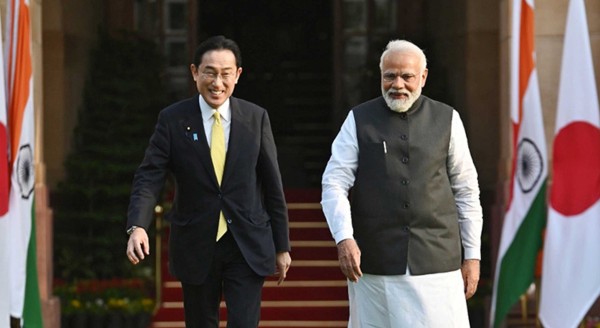
The invitation of the Indian Prime Minister to the G7 Hiroshima Summit and the cooperation between Japan and India ahead of the G7 and G20 summits provides a valuable opportunity for further collaboration and coordination on critical minerals. It is essential that all countries work together to ensure sustainable and responsible sourcing, recycling, and development of critical minerals to support the transition to a low-carbon economy and avoid supply chain disruptions.